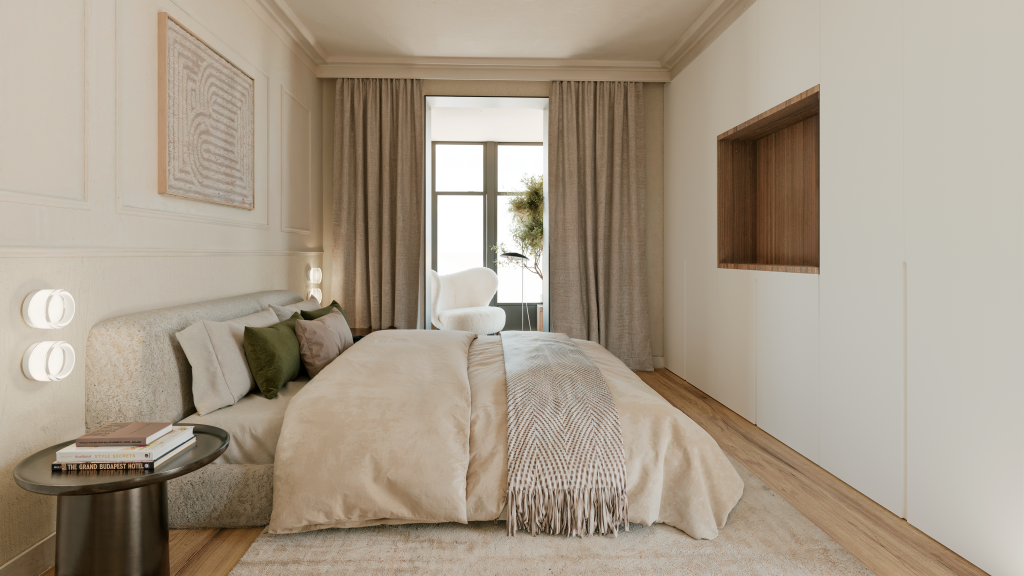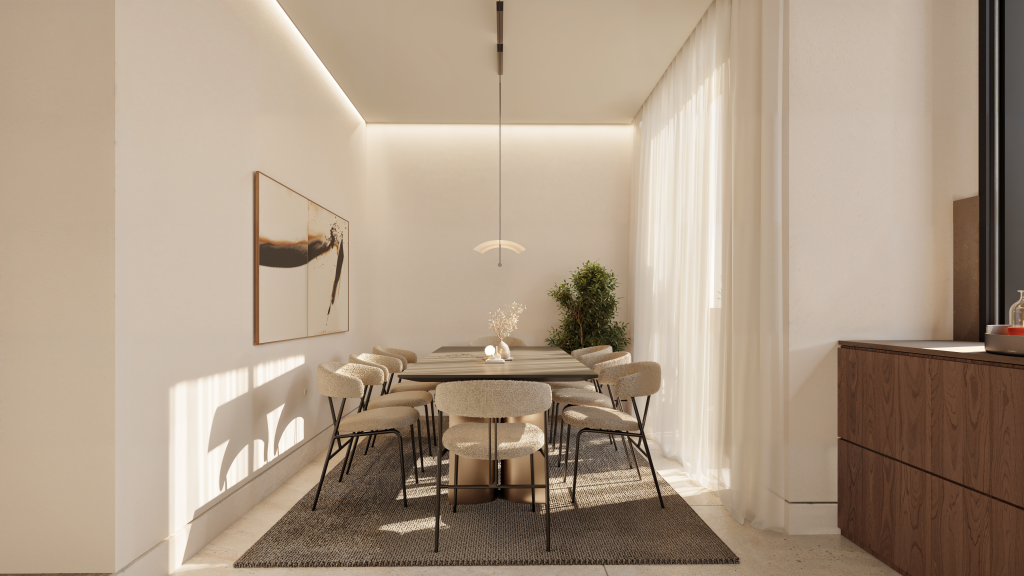
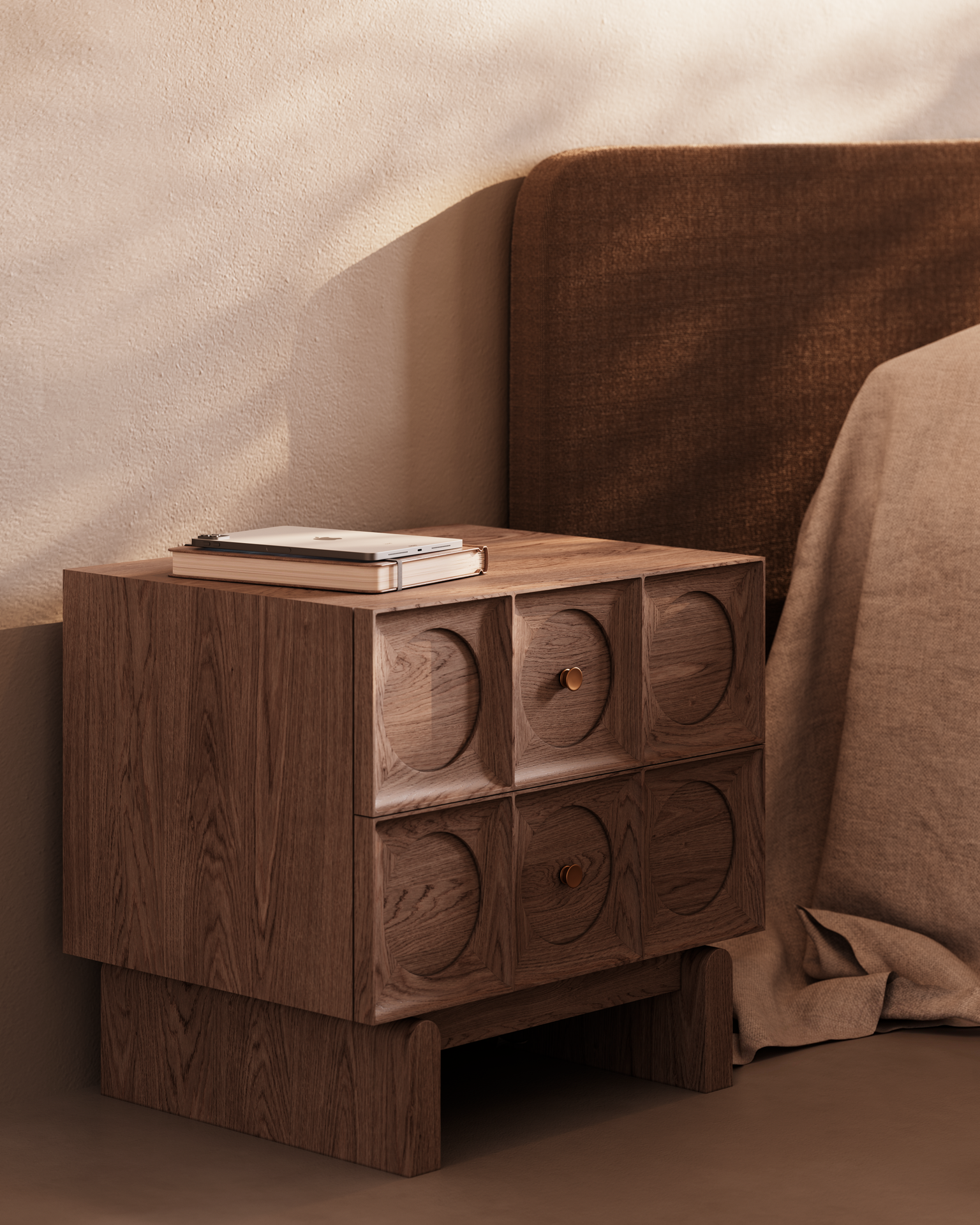
A quiet, yet decisive, shift is transforming how furniture brands compete in 2025. The market still rewards good design, of course, but with an unexpected twist: the brands that sell the most are those capable of anticipating what customers will want before the product even exists.
In a landscape where consumption cycles move faster than production cycles, 3D visualization has become the tool that allows brands to navigate this new reality with precision. This year’s aesthetic trends (more natural, more tactile, more sensorial) can no longer rely solely on creative intuition.
They require immediate adaptability. And this is where technology changes everything. Brands that integrate advanced Rendering processes can test real demand, adjust collections before manufacturing, reduce costs, and strengthen their commercial strategy long before an official launch. For any modern CGI company, this shift marks a defining moment.
The 2025 Hero Environment: The Kitchen. Warmth, Flexible Modules, and 3D Visualization
2025 solidifies a trend that has been rising for years: the kitchen becomes the vibrant heart of the home—an inviting, hybrid space intimately connected to daily life. Natural woods, earthy tones, matte finishes, and compositions that alternate closed volumes with open shelving dominate the landscape, creating a soft transition toward the living area.
Modularity plays a decisive role. Users increasingly seek flexible configurations that do not compromise aesthetics. In this context, kitchens developed as a 3D model allow manufacturers to design prototypes, test color variations, and offer consumers an immersive experience.
High-quality 3D renders prove to be a strategic tool for optimizing production chains and refining every detail before moving into fabrication, aligning perfectly with the principles of KBB high quality 3D design.
Bathrooms 2025: Sensory Spaces Designed as Modern Retreats
According to the latest trend analyses, bathrooms are being redefined in 2025 as true sensory sanctuaries; places dedicated to daily wellbeing and personal reconnection. Surfaces take center stage: large-format porcelain stoneware, textured tiles, and finishes inspired by natural stone play a key role in building calm, enveloping, deeply tactile atmospheres.
The aesthetic shifts away from the cold minimalism of past years and embraces a warmer, organic, imperfect language. Muted neutrals, soft veining, matte surfaces, and sculptural details transform the bathroom into a space that radiates serenity. Lighting becomes equally essential: diffused light, integrated LED strips, and soft shadow play create an intimate, almost ritual environment.
In this new scenario, the challenge for manufacturers and retailers goes far beyond creating beautiful materials. It lies in conveying their essence, tactility, and visual depth. Today’s highly advanced CGI and Visual technologies make it possible to showcase tonal variations and reflections with a level of fidelity unimaginable just a few years ago.
Bathroom collections presented through renders become a crucial asset for introducing ceramic lines, testing market reactions, and reducing the need for costly physical samples.
Living Spaces 2025: A Dialogue Between Nature and Technology
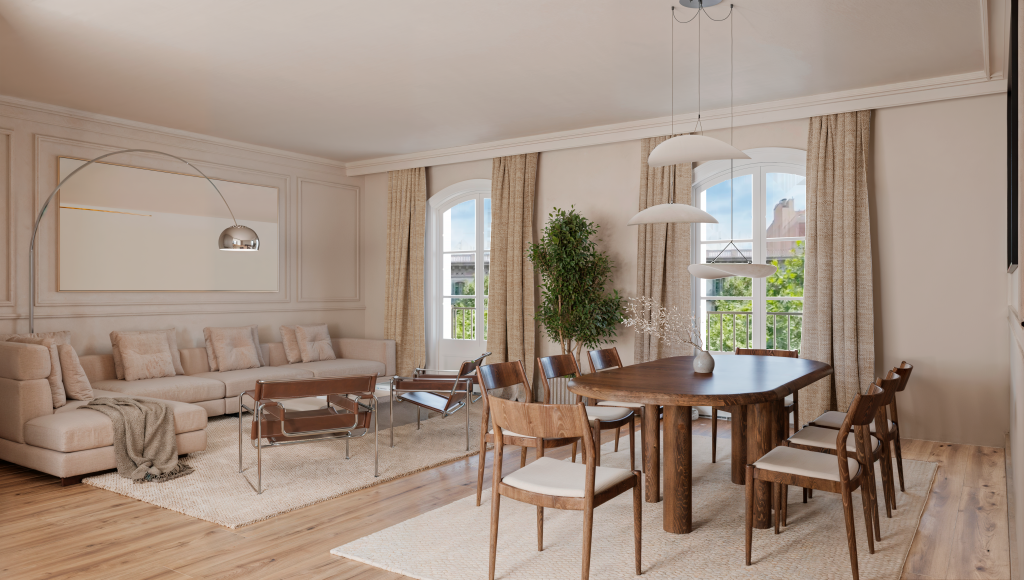
The living room continues to be one of the home’s central spaces and a privileged ground for aesthetic experimentation among designers and manufacturers.
New creative frontiers emerge through texture: light woods, organic fabrics, soft curves, and stone-inspired palettes coexist with a renewed Mediterranean sensibility centered on emotional comfort. Japandi influences, brutalism, tactile minimalism, and décor built around recycled materials enrich a visual language that seeks serenity without losing personality.
This movement reflects a deeper cultural shift. The home is now an adaptable refuge, a place where every element interacts with light, architecture, and daily rhythm. For brand owners and interior designers, this calls for more authorial storytelling.
Within this context, high-resolution Rendering becomes a natural extension of the creative process; enabling teams to test atmospheres and preview how a space will “breathe” before production, opening new perspectives on furniture design.
What Is the Real Purpose of Furniture Renders in Such a Complex Landscape?
Furniture renders, and more broadly any type of product Rendering, have become indispensable tools for brands operating in an accelerated market. Their utility extends far beyond aesthetic presentation:
- They enable brands to test demand before producing an entire collection
- They identify high-potential pieces
- They allow for design adjustments without physical prototyping
In the world of e-commerce, the impact is undeniable. A digital catalog built on 3D visualization increases conversions because it offers a level of material detail, shadows, proportions, and reflections that traditional photography cannot always achieve.
Operational benefits are equally decisive. Brand owners can launch new color or texture variations without producing each individual sample; reducing costs, accelerating time-to-market, and reinforcing omnichannel strategies at a moment when customers demand immediate and precise visual information.
It is no surprise, then, that the demand for CGI and Rendering services in London and other European creative hubs has grown so steadily in recent years. The industry now understands that Rendering and 3D visualization are no longer optional add-ons; they are structural components of the value chain, enabling smarter decisions, more accurate proposals.